A common question among those cooking sous-vide in high-altitude areas is whether cooking times and temperatures need to be adjusted. For example, in places located more than 3,000 metres above sea level, water boils at a temperature below 100 ºC. This can raise doubts when working with low-temperature cooking.
The short answer is: in sous-vide cooking, altitude does not affect how the product behaves as long as we work below the boiling point of water.
Why does altitude affect the boiling point?
At higher altitudes, atmospheric pressure is lower. This causes water to boil at a lower temperature than at sea level. In some high-altitude areas, water may boil at around 89 ºC.
This is important in traditional cooking techniques, especially when boiling water, because the maximum temperature that can be reached changes. However, in sous-vide cooking we normally work at temperatures below that point.
Do times and temperatures need to be changed in sous-vide cooking?
No. If we cook at low temperature, the product will behave in the same way with the same time and temperature, even if we are above sea level.
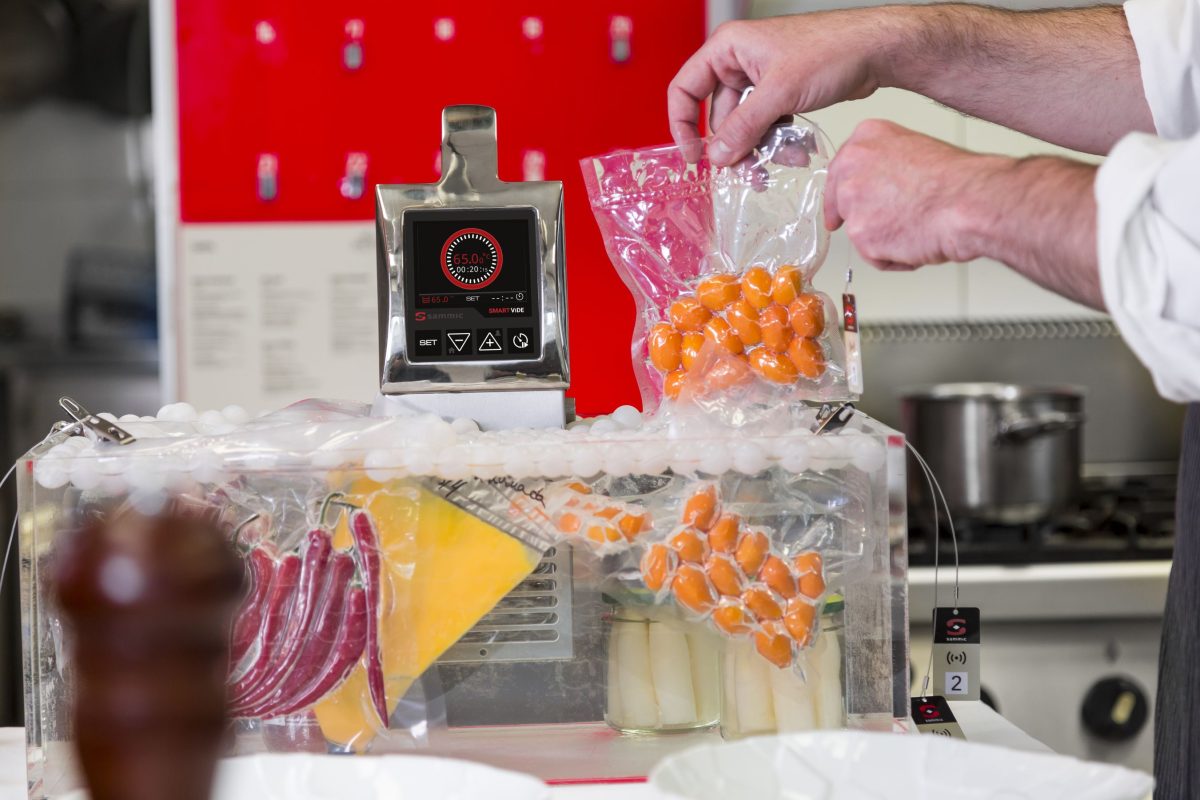
For example, if a sous-vide recipe indicates cooking a product at 65 ºC for a specific time, we can keep those same parameters, even when cooking at high altitude. The equipment will control the temperature of the bath and the food will reach the same cooking point.
What precaution should be taken?
The only important precaution is not to work above the boiling temperature of water in that location. If water boils at 89 ºC, it would not make sense to programme a cooking process above that temperature, as the bath will not be able to behave in the same way as it would at sea level. As long as we work below the boiling point, we can cook as normal.